My latest blog is here.
Please give me an upvote and leave me a comment.
Wednesday, 7 February 2018

Wednesday, 24 January 2018
Waiting for God
Originally posted on my Steemit blog here
We're constantly told as Christians to wait on God's timing, to trust Him, He's never late.....and all this is true. However, God's not early either, He's always just on time. My patience is something I'm always needing to work on as I don't like waiting, and even if something's on time it can still mean a wait.
I'm ever perplexed by God's timing. The church wasn't 'born' til 50 days after the ascension! Fifty days is a long time when you're waiting on God and you're not really sure what is coming next and the world is looking at you pointing fingers, and claiming your Messiah wasn't really Who He said He was. The disciples didn't know what exactly was going to happen on the day of Pentecost, they just had to wait and I bet those 50 days felt like 50 years.
So many people in the bible had huge waits - much longer than 50 days too! Noah had around 120 years forewarning of the flood; Abraham waited around 25 years for his promised heir; Moses had a huge wait....he waited 40 years to lead the Israelites out of Egypt - in fact he was a whopping 80 yrs old and just starting an epic adventure as an old man; Paul had 14 years after his dramatic conversion on the Road to Damascus to his first Missionary journey. Don't even get me started on Joseph! David waited years after his annointing by Samuel until he took the throne. Jesus also waited until He was around 30 years old until He started His public ministry.
Why does God wait? More importantly, what happens in this time, what is God doing?
I believe He isn't idly sitting around or forgetting about us. He's preparing us, He's building us up, but He doesn't rush because ultimately there is a perfect time for things, and we can't see that, but He can. The Holy Spirit came upon the disciples at Shavuot - Pentecost. The birth of the church was at a designated time and in the light of the Jewish Feasts and their significance on creation's time frame, it is highly significant that the church was born on this day.
If things are happening quickly in our lives - because of course, not everything takes a long time - I often think it's like we're in the pressure cooker. The job gets done quicker, but there is some pressure and heat during the process. However, when we're in the other camp, it's like we're in slow cookers so to speak, bubbling away slowly, He's tenderising the meat, cultivating the flavours of patience, endurance, compassion and love.
A long wait often means the lessons learnt during the wait are essential to the plan He has ahead for us. So the wait may depend partly on us and our willingness to be prepared and moulded.
I spend a lot of my life waiting. Not for just for God to move - just waiting in general. Waiting in queues, waiting in traffic jams, waiting for food to cook, waiting in for deliveries, waiting for children (to get dressed, eat, or basically do anything they are asked to do!)....and the list goes on.
But whatever we're waiting for, we are telling a story: our waiting is like a book telling others all about who we are. We radiate a very unique vibe when we're waiting, just take a look at your neighbouring drivers in a long traffic jam! We can wait well or we can be impatient, angry, frustrated waiters. Now, I'm quite impatient in the car and I get seriously frustrated on the road. But I've started changing my car habits; now my traffic jams are an opportunity to pray or praise God. Ignorant drivers are a signal from heaven of someone to pray for and bless right there in the moment. When I'm waiting for God I want to be waiting well and I've realised that the waiting I show in my book when I'm waiting on God speaks volumes.
But whatever we're waiting for, we are telling a story: our waiting is like a book telling others all about who we are. We radiate a very unique vibe when we're waiting, just take a look at your neighbouring drivers in a long traffic jam! We can wait well or we can be impatient, angry, frustrated waiters. Now, I'm quite impatient in the car and I get seriously frustrated on the road. But I've started changing my car habits; now my traffic jams are an opportunity to pray or praise God. Ignorant drivers are a signal from heaven of someone to pray for and bless right there in the moment. When I'm waiting for God I want to be waiting well and I've realised that the waiting I show in my book when I'm waiting on God speaks volumes.
As I look at my heroes in the faith for some encouragement, I realise that the waiting - even though sometimes very long - does not necessarily equal wilderness. David was annointed as king many years before he took the throne, yet the years he spent waiting drew him so close to God. Abraham spent years waiting for his heir, yet again so close to God had he become, and so firm his trust in Him that at the Akedah, he gave his own son into God's hand. The very son he'd waited many years for.
If you're waiting on God for a fulfilment of a promise or the answer to prayer, take a new view on the situation. A new perspective will turn the wait into a breath of fresh air. The waiting is not designed as a wilderness. It may feel dry and arid at times, but the waiting is a time of growth; a courting and a wooing by God; a time to rest entirely on Him; a time to learn to trust Him even more than before and become more intimate with Him, and to cultivate the characteristics to take on the next step in God's plan for our lives.

Friday, 5 January 2018
An Epiphany at Epiphany
Originally posted here
So I realised that I don't really know what Epiphany is about and what with it being tomorrow, January 6th, I thought I should find out.
Doing a little reading around, it seems it used to be quiet a big celebration day. It is thought to have been celebrated as far back as the 4th century and is associated with the wise men, or Magi, who followed the signs in the heavens (i.e. the unusual star), and visited Jesus with gifts. A story we're all familiar with.
So I realised that I don't really know what Epiphany is about and what with it being tomorrow, January 6th, I thought I should find out.
Doing a little reading around, it seems it used to be quiet a big celebration day. It is thought to have been celebrated as far back as the 4th century and is associated with the wise men, or Magi, who followed the signs in the heavens (i.e. the unusual star), and visited Jesus with gifts. A story we're all familiar with.
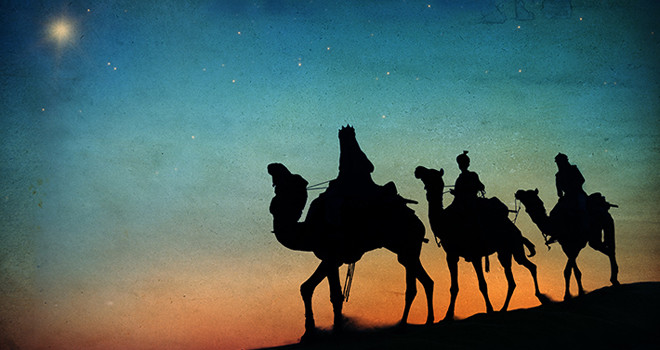
But if you think you know the story because of all the nativity scenes, just take a moment to realise that when Mary and Joseph arrived in Bethlehem and had to stay in the stable room, that they wouldn't have lingered there. Matthew 2 v 11 tells us when the Magi finally got to Mary & Joseph, they were in a house : "And on going into the house"
They are thought to have travelled around 1000 miles. That's a long way by camel power, or donkey power - or whatever animal would have been used. In fact even to travel 12 hrs a day, I've roughly calculated that such a journey would take nearly a year.
Now this got me thinking about the dedication that took. Even if my maths is off, and even if it was only 500 miles, it's still around 166 days travelling. That's half a year! ONE WAY!!
Now these men could have stayed home, still believed in God, still believed in the coming Messiah, and still been perfectly happy, perfectly blessed, and not have had to do years of careful study of the sky, understanding the constellations, navigation and taking that long perilous journey. The journey would have been over rough terrain, over deserts, in heat, in freezing night temperatures, with wild animals all around. They didn't even have any guarantee that the signs in the heavens they were seeing were what they hoped they were! The risks, on paper, were far too great to take this journey.
Yet they went anyway. They took a risk, they left their comfortable homes and left their whole lives behind, knowing that they would be gone for around a year - perhaps even longer - that's if they made it there and back in one piece.
I wonder whether I would do this. Would I do that to see a baby? But then I consider, would I do it to see Jesus? And my answer would be yes, unequivocally yes. And that's the same thought that the Magi had - would I take this risk simply to meet the Messiah? It's a yes every time!
Now just because our cosy little nativity scenes show three Magi, assumed because they took three gifts, there's actually no evidence to show there was only three. It's likely that there was a group of them. A group of learned men, who studied the prophecies, and were also students of astronomy who gave their time and energy to their skill. Yet I'm willing to bet, even after years of planning to set off the moment the heavens revealed the signs that they diligently searched for night after night for decades, that when the time came, some of them backed out and didn't go. I reckon there was a split, with some staying put, perhaps having doubts that this was the sign, perhaps some just deciding the journey wasn't worth it, and then the hardcore few who decided they'd take the risk and go.
Then I had an epiphany about Epiphany: We have a similar choice to these Magi. We have the choice to stay where we are in our Christian walk, to study the word, enjoy our Christianity in the comforts we have, or we can follow the signs and go deeper. We can take a leap of faith when God calls us to do so, and actually get closer to our Messiah. The journey will be long, the path crossing deserts and dangers, not even knowing where we are going, or how we're actually going to get there.
But I think at some point in our Christian lives, God gives us the choice that the Magi had- stay here, or take a leap of faith and go and meet the Messiah? For us, the 'meeting our Messiah' is a deeper relationship with Him. It is a process or journey of Romans 12 v 2 - "Be transformed by the renewing of your mind" and destination of 2 Corinthians 3 v 18 "And all of us, as with unveiled face, [because we] continued to behold [in the Word of God] as in a mirror the glory of the Lord, are constantly being transfigured into His very own image in ever increasing splendor and from one degree of glory to another"
I think He calls everyone to take this journey, a journey from merely study and knowing of Him to true faith in Him and seeing Him, knowing Him more fully. It's then up to us if we accept. Many don't, and that doesn't mean they're less saved, or less Christian. But they miss out on the very thing Jesus came to give us - Abundant Life. I used to think this was living life in comfort and abundant earthly blessing, but now I know it's not just knowing of Him, it's knowing HIM for there's no earthly treasure that could compare. For He IS life.
Tuesday, 2 January 2018
Don't put Christmas in a Box
Originally posted here on Steemit.com
It's just that time of year when we're packing Christmas away, putting it all back in boxes and storing it away in attics, garages or spare rooms for another 11 months. Lounges up and down the country are looking bare and empty as walls, doors and shelves are void of tinsel, cards and Christmas ornaments.
As the twinkly lights are gone and we revel in the extra space in the house, we need to make an effort to not pack Christmas away for the year. The decorations, the tree, the fairy lights are not Christmas, and we can easily take the 'out of sight, out of mind' approach when we put away the decorations. We don't think about the wonderful message of Christmas again. Up it pops in the loft with the tree.
Our thoughts at this time are on our "resolutions" to improve ourselves, lose weight, get fit or whatever we've decided we must do this year. Now I'm not a New Year's Resolution kind of girl. I don't make them (mainly because my shiny new year very often becomes tainted with my failures in the first few weeks....or days even! This marring of my brand new year by a big fat pig out pretty much ends up setting the scene of the next few months as I mull over my continual failings. I hate this, so I decided to make a change as and when the need arose. I don't wait til new year, I start right where and when I am. I am a girl of the NOW, just like the bible calls me to be and then I fall and stumble I remember the words of CS Lewis and pick myself up again and carry on. " "No amount of falls will really undo us if we keep on picking ourselves up each time!" ~ C.S. Lewis)
Anyway, I digress somewhat. What would we say about Christmas if we were to describe it, what is the essence of the season? In addition to the Christmas nativity account, we'd say it was a season of goodwill, spreading love, being with family, enjoying time together, giving gifts, seeing loved ones, sending cards and well wishes, catching up with people.
Whatever your goals or resolutions this year, or even if you haven't set any, make a decision to unpack Christmas every day. Every day you can wake up and be kind, give an unexpected gift to someone - just because! Make a donation to charity, help someone you've never helped, smile at people as you pass them, call in on people to check how they are, send a card to an old friend telling them you're thinking of them, volunteer one weekend somewhere, be thoughtful on the roads, leave a tip at a cafe, make a gift for your loved ones......go to church and see what it's like at a different time of year! Because Christmas isn't trees and stars, or crackers and baubles, it's LOVE.
Each day we can make a decision to just be a little more kinder, a little more gracious, a little more thankful, a little more loving, a littler more humbler, a little more generous than the day before.
Don't pack Christmas away for the year, keep it in your heart and live it every day!
It's just that time of year when we're packing Christmas away, putting it all back in boxes and storing it away in attics, garages or spare rooms for another 11 months. Lounges up and down the country are looking bare and empty as walls, doors and shelves are void of tinsel, cards and Christmas ornaments.
As the twinkly lights are gone and we revel in the extra space in the house, we need to make an effort to not pack Christmas away for the year. The decorations, the tree, the fairy lights are not Christmas, and we can easily take the 'out of sight, out of mind' approach when we put away the decorations. We don't think about the wonderful message of Christmas again. Up it pops in the loft with the tree.
Our thoughts at this time are on our "resolutions" to improve ourselves, lose weight, get fit or whatever we've decided we must do this year. Now I'm not a New Year's Resolution kind of girl. I don't make them (mainly because my shiny new year very often becomes tainted with my failures in the first few weeks....or days even! This marring of my brand new year by a big fat pig out pretty much ends up setting the scene of the next few months as I mull over my continual failings. I hate this, so I decided to make a change as and when the need arose. I don't wait til new year, I start right where and when I am. I am a girl of the NOW, just like the bible calls me to be and then I fall and stumble I remember the words of CS Lewis and pick myself up again and carry on. " "No amount of falls will really undo us if we keep on picking ourselves up each time!" ~ C.S. Lewis)
Anyway, I digress somewhat. What would we say about Christmas if we were to describe it, what is the essence of the season? In addition to the Christmas nativity account, we'd say it was a season of goodwill, spreading love, being with family, enjoying time together, giving gifts, seeing loved ones, sending cards and well wishes, catching up with people.
Whatever your goals or resolutions this year, or even if you haven't set any, make a decision to unpack Christmas every day. Every day you can wake up and be kind, give an unexpected gift to someone - just because! Make a donation to charity, help someone you've never helped, smile at people as you pass them, call in on people to check how they are, send a card to an old friend telling them you're thinking of them, volunteer one weekend somewhere, be thoughtful on the roads, leave a tip at a cafe, make a gift for your loved ones......go to church and see what it's like at a different time of year! Because Christmas isn't trees and stars, or crackers and baubles, it's LOVE.
Each day we can make a decision to just be a little more kinder, a little more gracious, a little more thankful, a little more loving, a littler more humbler, a little more generous than the day before.
Don't pack Christmas away for the year, keep it in your heart and live it every day!
Thursday, 28 December 2017
The Road to Emmaus
We all know the account in Luke of two disciples walking the road to Emmaus. It may seem an unremarkable story: two disciples walking together, obviously getting a little more exciting when Jesus enters but they don't recognise Him, then they do when they reach their destination. However, I see it as a phenomenal account, full of nuggets of truth and revelation that truly blesses my socks off.
I believe we all need to take the road to Emmaus at some point in our lives.
I hardly know where to begin with this little study, it could just run away with me, so let's start with Emmaus first. It is thought to come from the Hebrew 'Hammath', meaning warm, and Josephus described it thus: "Now Emmaus, if it be interpreted, may be rendered `a warm bath' for therein is a spring of warm water useful for healing."
Getting straight into the account then, it's resurrection day, the disciples have spent the last 2 days thinking Jesus is dead (which indeed He was), but now they've had reports that the stone has been rolled away from the tomb He was in, the tomb is empty, and the angels have declared He's risen. Some are in complete disbelief, Peter's ran off to the tomb to see for himself, and two of His close circle (Cleopas and another unnamed one), are taking off from Jerusalem and heading to Emmaus, seemingly in discombobulation. What they are travelling for, we are not told. But as the name of the town suggests, perhaps they were off for some healing for their grieving souls? On the way, they're chatting about the events that have taken place. Who can blame them - the last 3 years must have been astonishing, and a culmination of the last 3 days will have been difficult for anyone to get their head around.
There soon appears to be two huge problems though. From Luke, 24 and verse 17 - 23, we can quickly identify a couple of issues. At this point, Jesus has just appeared to them:
Problem number one, which Jesus calls out - their conversation as they went along was sad. When you're sad you're often negative, the two just go hand in hand. So this conversation although it was about Jesus and the recent events, was sad and likely negative, or not faith-filled. The word sad in the verse is the Greek skythrōpos and means sad, gloomy and its root word means to appear sullen. So these were not really two people you'd want to walk with on a long journey. They were miserable, and they looked it too! Jesus was listening in to their conversation, as He clearly makes known. Now I love how God always asks us questions. Have you noticed? He knows full well the answer, yet He always gives us the chance to tell it in our own words.
"Where are you" ~ God to Adam in the garden (Gen 3 v 9). He knew where Adam was!
"What is this you have done?" ~ God to Eve a verse later.
"What are you doing here, Elijah?" ~ God to Elijah in 1 Kings 19
I could give more but you get the idea.
God likes to ask us questions because when we answer, we can hear our own words. Very often we have no idea of what we are doing, so God calls us out and says 'Hey, what are you up to?' and we can take stock, and admit we've wandered off the path.We can either answer with words of faith, or words of unbelief (or downright stupidity in some cases!). We are accountable to ourselves when we speak out, and our words make us accountable to God too. He also loves talking to us, and to show us it's a two-way street.
Back to the question, the very simple question that Jesus asks: "What things?"
He's saying, think about it guys, what has happened? Spell it out, piece by piece and look at it. So they do, and we encounter the next problem. Jesus of Nazareth, the Prophet. Now what a problem they have here, they only see the recent events through the lens of Jesus being a prophet. No wonder they're melancholy, no wonder they're sullen and running away! No wonder they're going round in conversational circles. They won't make any sense of what has happened if that's their view of Jesus.
What's your view of Jesus? Is He just a prophet? Or is He something that you've made Him into - a version of Christ that fits in with your life, and within your comfort zone, a more palatable version that fits in with your religious persuasions? Or is He what He says He is - the Great I AM?
If He's the former, your life will be just like the journey of these two disciples so far in the account: frustrated, sullen, trying to head for some warm refreshing springs, but never fully being satisfied. If however, He's the latter, the great I AM, Jehovah Jirah, Saviour, Redeemer, El Shaddai.... then you will experience the downright miraculous, the unexpected, the unimaginable; burning bushes, oceans parting; multiplication and abundance in your need; joy inexplicable, and a peace that passes understanding.
Now the word hoping where it says "we were hoping that it was He who was going to redeem Israel" is the Greek word elpizō which means to hope and trust in, and the very same word is used many places throughout the NT, and it conveys a meaning of a confident expectation of good.
So they had hope, they had some faith, but there's something very wrong in that their hope has lead to them being so sad. These do not go hand in hand for if we have a confident expectation of good, and we have faith in God, why should we look so sullen? Yet this is how so many of the church look to the world! We profess to be His disciples, we profess that we have hope in Him, we even talk of Him.....but to what end? Is our knowledge of Him faulty, or insufficient and do we know Him truly as Lord; though our words may be of Him, they are not faith filled and as such they are as empty cups: useless, powerless and devoid of true faith.
These two could recount the events that had taken place, but there was no deeper understanding and no personal knowledge. They could tell a story, but they could give no meaning to it.
Now, if you think I'm being harsh on them, I'm allowed to because Jesus was harsher. "Foolish" He called them! They saw miracles, were around on the very earth Jesus was, stepping where His feet walked and hearing all His teaching directly, yet they still had this warped vision of Jesus as merely a prophet, and had no faith in their hearts. Jesus was being kind just calling them foolish - I'd have been a lot harsher.
The first thing He does is set out the primary error - the prophets and the Christ are very different. The prophets are people, acting on behalf of God, towards the people for instruction and warning. The Christ is God Himself sent to the people, for the people for their salvation.
Then He said to them,
Until we see this in His word, we're walking blindly on the road like these two were. Once they saw the Deity of Jesus, their faith could grow and their hearts could be lifted. Spiritually their eyes were opened and they saw Jesus properly, in Spirit and in truth, even though they didn't see Jesus physically yet. There's a powerful message here: to see Him spiritually, to see Him in the Word, is much more important than seeing Him physically. I'd love to see His face, as I'm sure millions of Christians would, but to see Him through the scriptures is more important. Seeing Him face to face will not invoke faith - these two are a prime example. They walked along the streets of Jerusalem with Him just says before, yet still didn't see Him as Lord and Christ! Seeing is NOT believing. This is clear throughout scripture, just take Mark 5 for example. Jesus heals the man at the tombs who was possessed. The people of the town nearby all saw Jesus, they saw the man now healed and in his right mind, yet they told Him to go away! They wouldn't accept Him. Then there's the people of His own town where they couldn't get past the fact that He was Joseph's Son, and although people who had been miraculously healed where there in the crowd, following Him around and they could see the evidence of His works, they wouldn't accept or believe in Him.
Faith comes by hearing, and hearing by the WORD. It doesn't come from seeing miracles, or seeing Jesus face to face even. It was only after they'd broken bread with Jesus, accepting His forgiveness through His blood, and taking His broken body - the Bread of Life - true healing that comes from Him, that they were then able to see His face.
We must take our bread daily to see Him daily through the Word. The importance of this daily aspect is becoming more and more apparent to me. It really doesn't matter if we start with a few crumbs, a few moments daily, we just must start with something daily.
There are two other key points I drew out of this before I sign off. Firstly, I mentioned Emmaus means warm. Look at what they said when they realised it was Jesus with them -
Does your heart burn for Him? That's the reason for the road to Emmaus - to change you from your doubtful state, to give you a revelation into Who Jesus REALLY is (and this will be via the Scriptures and your personal communication and relationship with Him), and to set your heart ablaze for Him. Your healing comes when you see Jesus as He really is - The Son of God Most High. The road to being "warm" or burning with zeal and love for Him begins with taking the steps in the right direction. But they didn't stay where it was "warm" (Emmaus), they continued to where they should be, back to Jerusalem to receive the fire of the Holy Spirit!
The second thing I also found which I thought was interesting was the name of the disciple we are given - Cleopas. The name derives from two Greek words - Kleo meaning to make known, to tell of, or to make famous. Cleopas is possibly a shorted form of the male equivalent of Cleopatra (Cleopatros) and this name means to make famous the Father! (Patros is father). But the actual Greek word "pas" means everything. So his full name might mean to make famous the Father, but Luke has referred to him specifically as the shorted Cleopas - which means to make known everything, which is incredibly apt as this is exactly what Jesus did. He made known everything about Himself to these two very fortunate people. And of course, when we know Jesus, we can then know the Father.
Our road to Emmaus may be tough to begin with, a place where unbelief and doubts pave the road, where sadness and sullenness mars our countenance, a place where our first steps find us beholding Jesus as something He isn't. But our journey should end with a revelation of Him as He truly is; however that requires us to let go of our preconceived ideas of Him and see Him in His Word.
To get to know Him truly, we must see Him though His Word. We must put aside our own ideas and desires of reaching our own destination as it will never bring healing; only partaking of communion with Him will bring healing. When we open our hearts to Him truly, and when we really see Him and our hearts burn for Him, we will reach a place where we can echo with Job:
The road to Emmaus is one of the most exciting journeys we will take. But remember, it is only the beginning of a longer road to our own 'Jerusalem' or promised land of God's will, wherever that may be for us.
I believe we all need to take the road to Emmaus at some point in our lives.
I hardly know where to begin with this little study, it could just run away with me, so let's start with Emmaus first. It is thought to come from the Hebrew 'Hammath', meaning warm, and Josephus described it thus: "Now Emmaus, if it be interpreted, may be rendered `a warm bath' for therein is a spring of warm water useful for healing."
Getting straight into the account then, it's resurrection day, the disciples have spent the last 2 days thinking Jesus is dead (which indeed He was), but now they've had reports that the stone has been rolled away from the tomb He was in, the tomb is empty, and the angels have declared He's risen. Some are in complete disbelief, Peter's ran off to the tomb to see for himself, and two of His close circle (Cleopas and another unnamed one), are taking off from Jerusalem and heading to Emmaus, seemingly in discombobulation. What they are travelling for, we are not told. But as the name of the town suggests, perhaps they were off for some healing for their grieving souls? On the way, they're chatting about the events that have taken place. Who can blame them - the last 3 years must have been astonishing, and a culmination of the last 3 days will have been difficult for anyone to get their head around.
There soon appears to be two huge problems though. From Luke, 24 and verse 17 - 23, we can quickly identify a couple of issues. At this point, Jesus has just appeared to them:
And He said to them, “What kind of conversation is this that you have with one another as you walk and are sad?” Then the one whose name was Cleopas answered and said to Him, “Are You the only stranger in Jerusalem, and have You not known the things which happened there in these days?”
And He said to them, “What things?”
So they said to Him, “The things concerning Jesus of Nazareth, who was a Prophet mighty in deed and word before God and all the people, and how the chief priests and our rulers delivered Him to be condemned to death, and crucified Him. But we were hoping that it was He who was going to redeem Israel. Indeed, besides all this, today is the third day since these things happened. Yes, and certain women of our company, who arrived at the tomb early, astonished us. When they did not find His body, they came saying that they had also seen a vision of angels who said He was alive. And certain of those who were with us went to the tomb and found it just as the women had said; but Him they did not see.”
(Emphasis added by me)Problem number one, which Jesus calls out - their conversation as they went along was sad. When you're sad you're often negative, the two just go hand in hand. So this conversation although it was about Jesus and the recent events, was sad and likely negative, or not faith-filled. The word sad in the verse is the Greek skythrōpos and means sad, gloomy and its root word means to appear sullen. So these were not really two people you'd want to walk with on a long journey. They were miserable, and they looked it too! Jesus was listening in to their conversation, as He clearly makes known. Now I love how God always asks us questions. Have you noticed? He knows full well the answer, yet He always gives us the chance to tell it in our own words.
"Where are you" ~ God to Adam in the garden (Gen 3 v 9). He knew where Adam was!
"What is this you have done?" ~ God to Eve a verse later.
"What are you doing here, Elijah?" ~ God to Elijah in 1 Kings 19
I could give more but you get the idea.
God likes to ask us questions because when we answer, we can hear our own words. Very often we have no idea of what we are doing, so God calls us out and says 'Hey, what are you up to?' and we can take stock, and admit we've wandered off the path.We can either answer with words of faith, or words of unbelief (or downright stupidity in some cases!). We are accountable to ourselves when we speak out, and our words make us accountable to God too. He also loves talking to us, and to show us it's a two-way street.
Back to the question, the very simple question that Jesus asks: "What things?"
He's saying, think about it guys, what has happened? Spell it out, piece by piece and look at it. So they do, and we encounter the next problem. Jesus of Nazareth, the Prophet. Now what a problem they have here, they only see the recent events through the lens of Jesus being a prophet. No wonder they're melancholy, no wonder they're sullen and running away! No wonder they're going round in conversational circles. They won't make any sense of what has happened if that's their view of Jesus.
What's your view of Jesus? Is He just a prophet? Or is He something that you've made Him into - a version of Christ that fits in with your life, and within your comfort zone, a more palatable version that fits in with your religious persuasions? Or is He what He says He is - the Great I AM?
If He's the former, your life will be just like the journey of these two disciples so far in the account: frustrated, sullen, trying to head for some warm refreshing springs, but never fully being satisfied. If however, He's the latter, the great I AM, Jehovah Jirah, Saviour, Redeemer, El Shaddai.... then you will experience the downright miraculous, the unexpected, the unimaginable; burning bushes, oceans parting; multiplication and abundance in your need; joy inexplicable, and a peace that passes understanding.
Now the word hoping where it says "we were hoping that it was He who was going to redeem Israel" is the Greek word elpizō which means to hope and trust in, and the very same word is used many places throughout the NT, and it conveys a meaning of a confident expectation of good.
So they had hope, they had some faith, but there's something very wrong in that their hope has lead to them being so sad. These do not go hand in hand for if we have a confident expectation of good, and we have faith in God, why should we look so sullen? Yet this is how so many of the church look to the world! We profess to be His disciples, we profess that we have hope in Him, we even talk of Him.....but to what end? Is our knowledge of Him faulty, or insufficient and do we know Him truly as Lord; though our words may be of Him, they are not faith filled and as such they are as empty cups: useless, powerless and devoid of true faith.
These two could recount the events that had taken place, but there was no deeper understanding and no personal knowledge. They could tell a story, but they could give no meaning to it.
Now, if you think I'm being harsh on them, I'm allowed to because Jesus was harsher. "Foolish" He called them! They saw miracles, were around on the very earth Jesus was, stepping where His feet walked and hearing all His teaching directly, yet they still had this warped vision of Jesus as merely a prophet, and had no faith in their hearts. Jesus was being kind just calling them foolish - I'd have been a lot harsher.
The first thing He does is set out the primary error - the prophets and the Christ are very different. The prophets are people, acting on behalf of God, towards the people for instruction and warning. The Christ is God Himself sent to the people, for the people for their salvation.
Then He said to them,
“O foolish ones, and slow of heart to believe in all that the prophets have spoken! Ought not the Christ to have suffered these things and to enter into His glory?” And beginning at Moses and all the Prophets, He expounded to them in all the Scriptures the things concerning Himself."
This is the beginning of the road. Jesus sets forth one of the most missed truths in Christendom - He is found in the Scriptures, from beginning to end. He may have started at Moses for these two, but we can clearly see Him from Genesis, right through each book, like a thread woven by each writer; even though the bible was written by around 40 different men, over a period of around 1000yrs, certain truths and revelations lay hidden in each book with clear themes, and amazing accuracy. Each word is divinely inspired and God-breathed to make a supernatural tapestry of prophecy, history and poetry that all beautifully points to Jesus. Until we see this in His word, we're walking blindly on the road like these two were. Once they saw the Deity of Jesus, their faith could grow and their hearts could be lifted. Spiritually their eyes were opened and they saw Jesus properly, in Spirit and in truth, even though they didn't see Jesus physically yet. There's a powerful message here: to see Him spiritually, to see Him in the Word, is much more important than seeing Him physically. I'd love to see His face, as I'm sure millions of Christians would, but to see Him through the scriptures is more important. Seeing Him face to face will not invoke faith - these two are a prime example. They walked along the streets of Jerusalem with Him just says before, yet still didn't see Him as Lord and Christ! Seeing is NOT believing. This is clear throughout scripture, just take Mark 5 for example. Jesus heals the man at the tombs who was possessed. The people of the town nearby all saw Jesus, they saw the man now healed and in his right mind, yet they told Him to go away! They wouldn't accept Him. Then there's the people of His own town where they couldn't get past the fact that He was Joseph's Son, and although people who had been miraculously healed where there in the crowd, following Him around and they could see the evidence of His works, they wouldn't accept or believe in Him.
Faith comes by hearing, and hearing by the WORD. It doesn't come from seeing miracles, or seeing Jesus face to face even. It was only after they'd broken bread with Jesus, accepting His forgiveness through His blood, and taking His broken body - the Bread of Life - true healing that comes from Him, that they were then able to see His face.
Now it came to pass, as He sat at the table with them, that He took bread, blessed and broke it, and gave it to them. Then their eyes were opened and they knew Him;
We must take our bread daily to see Him daily through the Word. The importance of this daily aspect is becoming more and more apparent to me. It really doesn't matter if we start with a few crumbs, a few moments daily, we just must start with something daily.
There are two other key points I drew out of this before I sign off. Firstly, I mentioned Emmaus means warm. Look at what they said when they realised it was Jesus with them -
“Did not our heart burn within us while He talked with us on the road, and while He opened the Scriptures to us?”
Does your heart burn for Him? That's the reason for the road to Emmaus - to change you from your doubtful state, to give you a revelation into Who Jesus REALLY is (and this will be via the Scriptures and your personal communication and relationship with Him), and to set your heart ablaze for Him. Your healing comes when you see Jesus as He really is - The Son of God Most High. The road to being "warm" or burning with zeal and love for Him begins with taking the steps in the right direction. But they didn't stay where it was "warm" (Emmaus), they continued to where they should be, back to Jerusalem to receive the fire of the Holy Spirit!
The second thing I also found which I thought was interesting was the name of the disciple we are given - Cleopas. The name derives from two Greek words - Kleo meaning to make known, to tell of, or to make famous. Cleopas is possibly a shorted form of the male equivalent of Cleopatra (Cleopatros) and this name means to make famous the Father! (Patros is father). But the actual Greek word "pas" means everything. So his full name might mean to make famous the Father, but Luke has referred to him specifically as the shorted Cleopas - which means to make known everything, which is incredibly apt as this is exactly what Jesus did. He made known everything about Himself to these two very fortunate people. And of course, when we know Jesus, we can then know the Father.
Our road to Emmaus may be tough to begin with, a place where unbelief and doubts pave the road, where sadness and sullenness mars our countenance, a place where our first steps find us beholding Jesus as something He isn't. But our journey should end with a revelation of Him as He truly is; however that requires us to let go of our preconceived ideas of Him and see Him in His Word.
To get to know Him truly, we must see Him though His Word. We must put aside our own ideas and desires of reaching our own destination as it will never bring healing; only partaking of communion with Him will bring healing. When we open our hearts to Him truly, and when we really see Him and our hearts burn for Him, we will reach a place where we can echo with Job:
I have heard of You by the hearing of the ear, But now my eye sees You
Job 42 v 5.The road to Emmaus is one of the most exciting journeys we will take. But remember, it is only the beginning of a longer road to our own 'Jerusalem' or promised land of God's will, wherever that may be for us.
Subscribe to:
Posts (Atom)